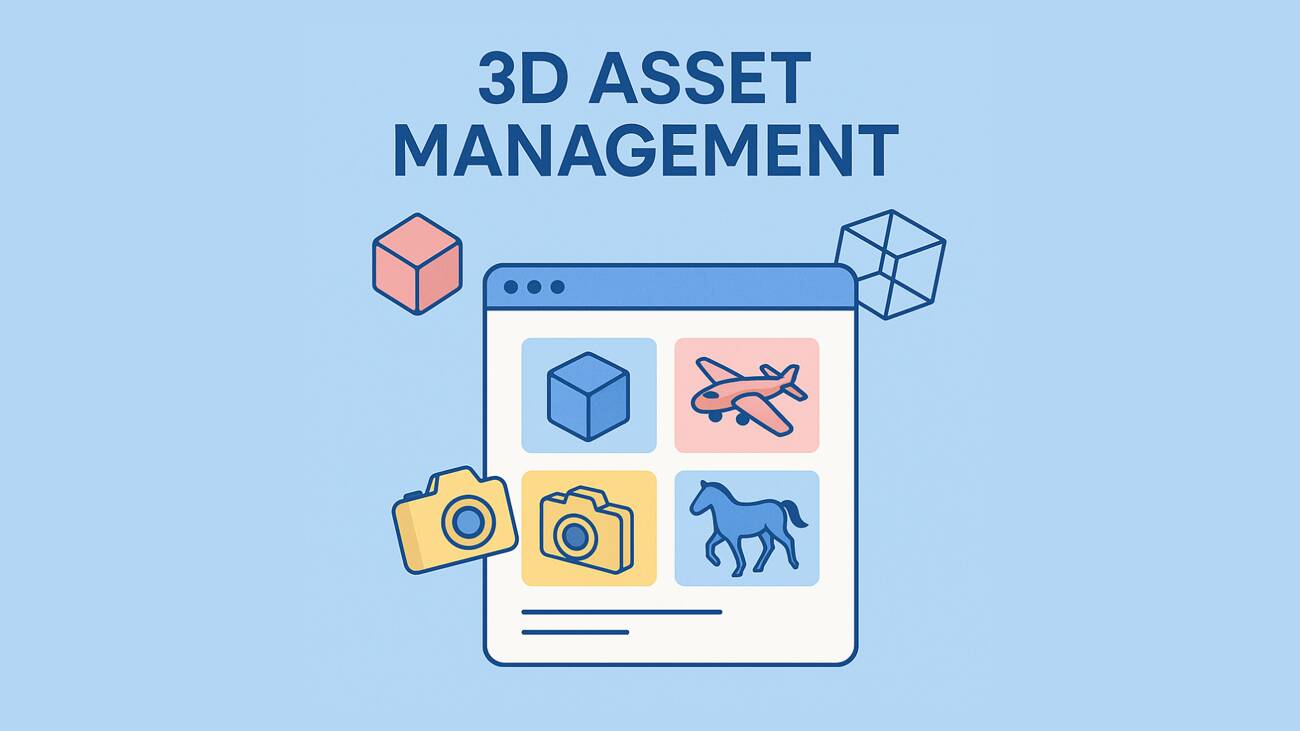
3D asset management refers to the process of storing, organizing, and managing 3D digital files—such as models, renders, textures, and related project data—within a structured system. These assets are commonly used in architecture, engineering, construction, manufacturing, product design, gaming, and visualization workflows.
Unlike traditional image or document libraries, 3D asset management focuses on handling complex file formats, large file sizes, and interrelated assets that need to remain accessible and reusable over time.
A 3D asset is any digital file used to represent a three-dimensional object or environment.
Common examples include:
These assets are often linked to specific projects, versions, or real-world objects, making structured organization essential.
3D asset management systems organize files using metadata and relationships, rather than relying only on folders.
This typically includes:
The goal is to ensure that teams can find and reuse the right version of a 3D asset without confusion or duplication.
As 3D libraries grow, unmanaged assets can quickly become difficult to locate or reuse.
Effective 3D asset management helps organizations:
This is especially important in industries where 3D assets are reused across multiple projects or lifecycles.
In many organizations, 3D asset management is handled within a Digital Asset Management (DAM) system.
DAM platforms allow 3D assets to be managed alongside images, documents, videos, and other file types, using shared metadata structures and access controls.
This unified approach is useful for teams that work with mixed asset libraries rather than standalone 3D-only repositories.
Daminion supports 3D asset management as part of its broader DAM functionality, allowing teams to organize and search 3D files together with related project assets.
This makes it suitable for organizations in architecture, engineering, manufacturing, and design that need structured access to complex digital libraries.