March 11, 2026
Updated

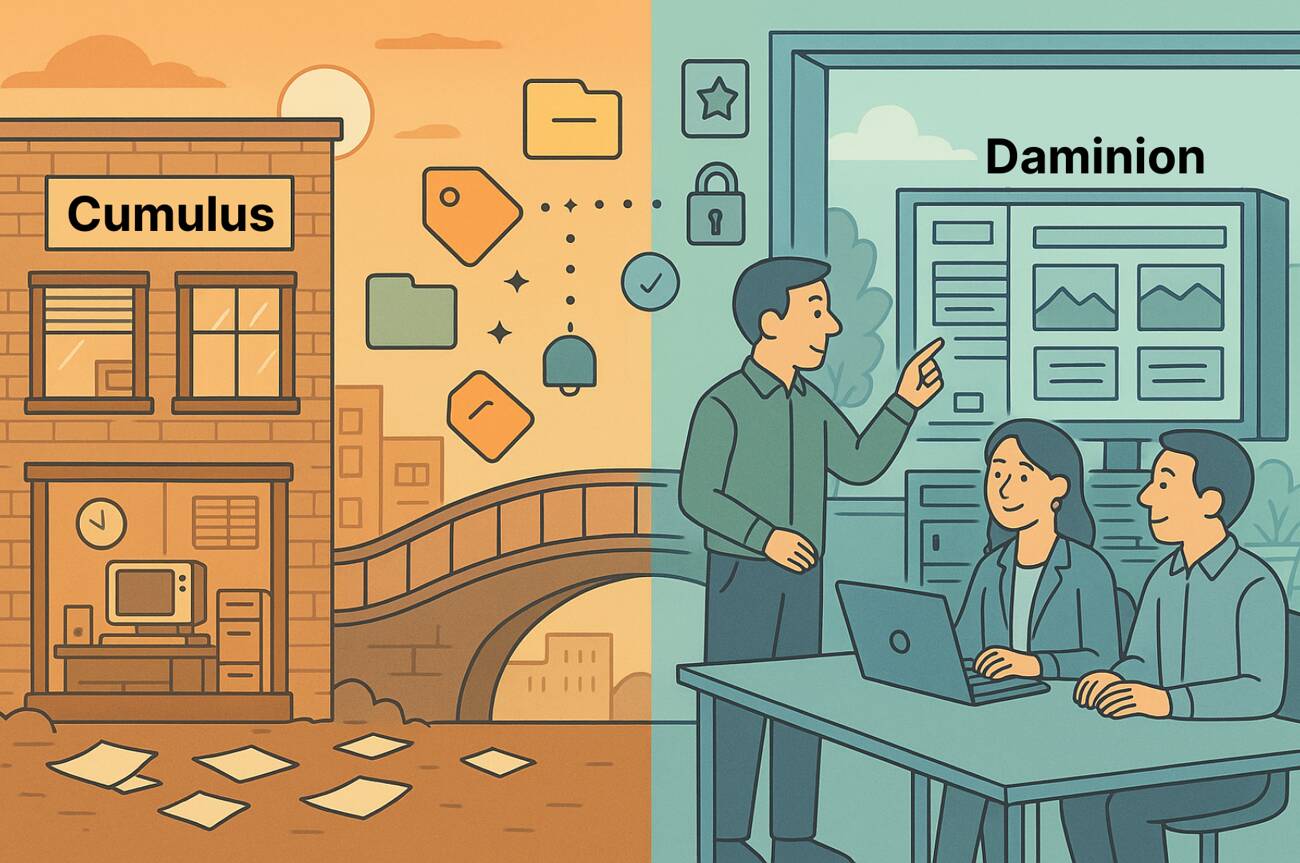
Both Daminion and OpenAsset are great DAM solutions for architecture, engineering, and construction, but one will serve your purposes better than the other.
You’ve been looking for digital asset management (DAM) software to help your team quickly locate project files, avoid unauthorized overwrites, or fast-forward approvals. The search has predictably led you to consider multiple options, Daminion and OpenAsset being top choices.
Neither solution objectively trumps the other. But subjectively, one will fit your needs better.

Finding the right DAM solution for your architecture, engineering, construction, or design firm often comes down to one thing: scale. The tools a 20-person boutique design studio needs are very different from the platform a 2,000-person global enterprise requires.
A large multinational architecture firm may need to connect its terabytes of photos to its CRM and HR databases to automate proposal generation. A mid-sized engineering bureau may simply need to find a client-approved render in under 10 seconds, without paying for features it will never use.
OpenAsset builds its solution for the large enterprise. Daminion delivers powerful, focused tools for small-to-medium AEC teams that want total control over their assets and their budget.
Architecture and design teams use Daminion to remove common blockers related to approval workflows and file location. You can navigate thousands of media files instantly and keep everyone in sync.
A major bonus? You can host your files locally and pay no recurring cloud storage fees. In addition, your load speed doesn’t rely on external cloud providers or your internet speed—it only relies on your local servers.
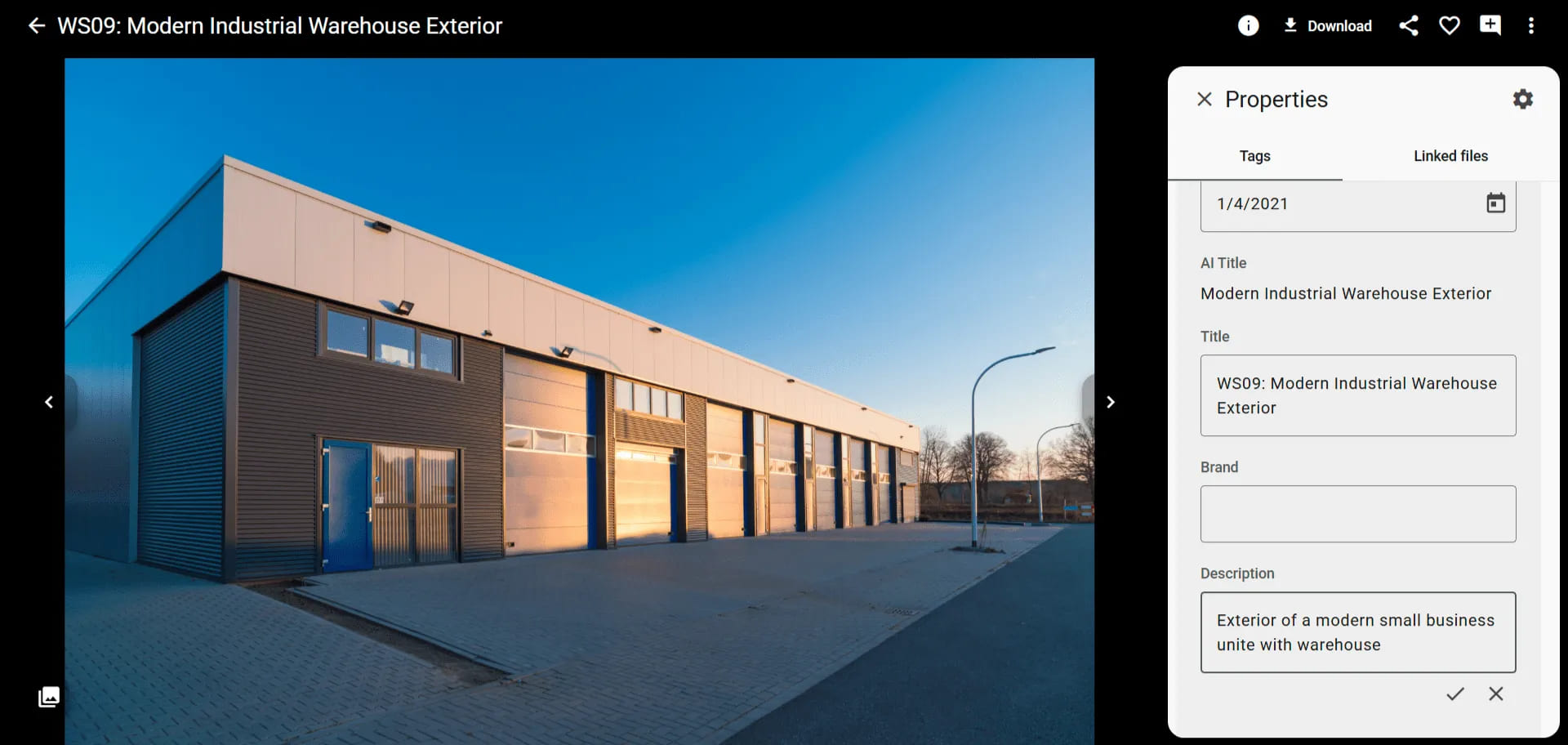
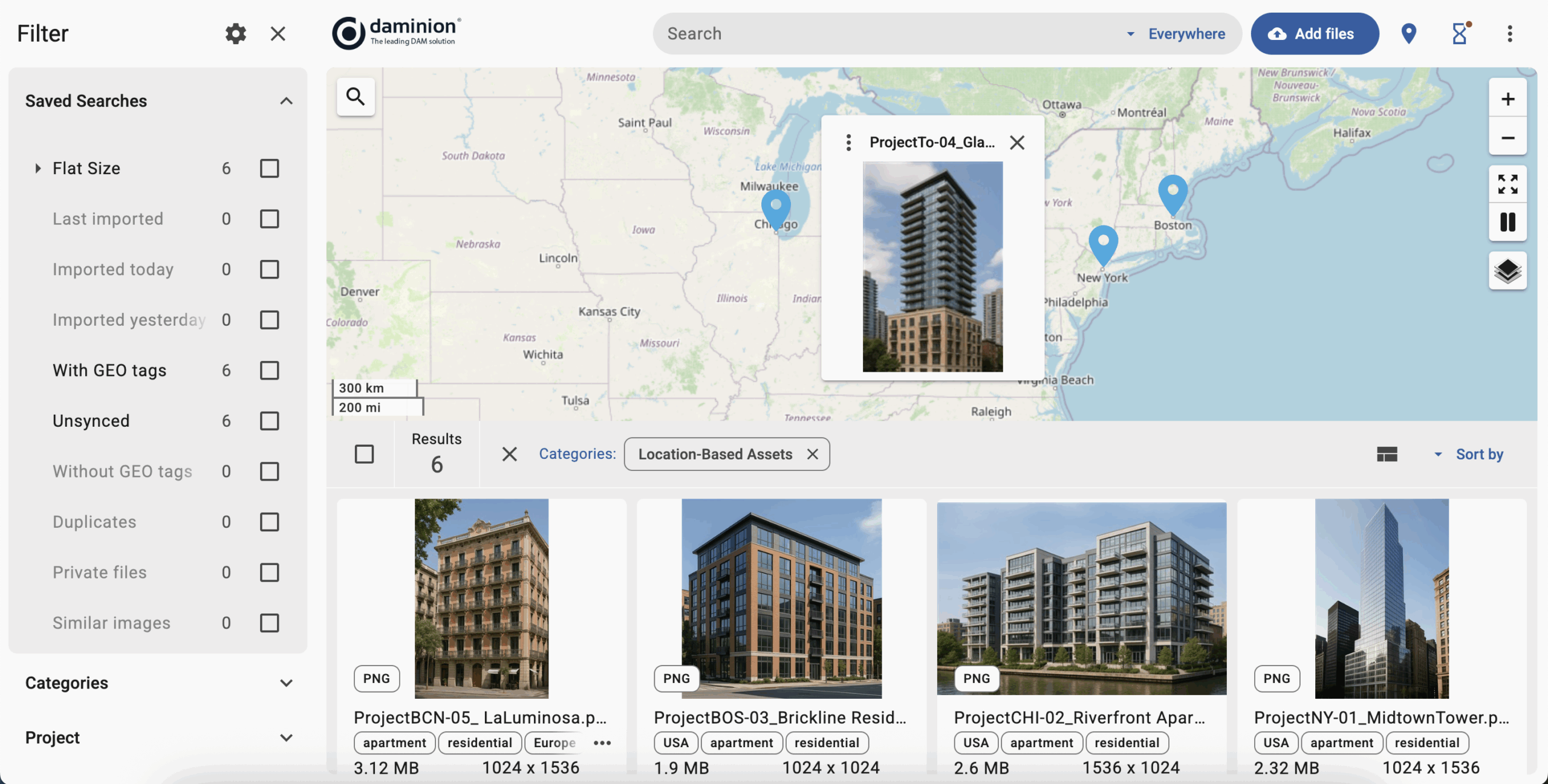
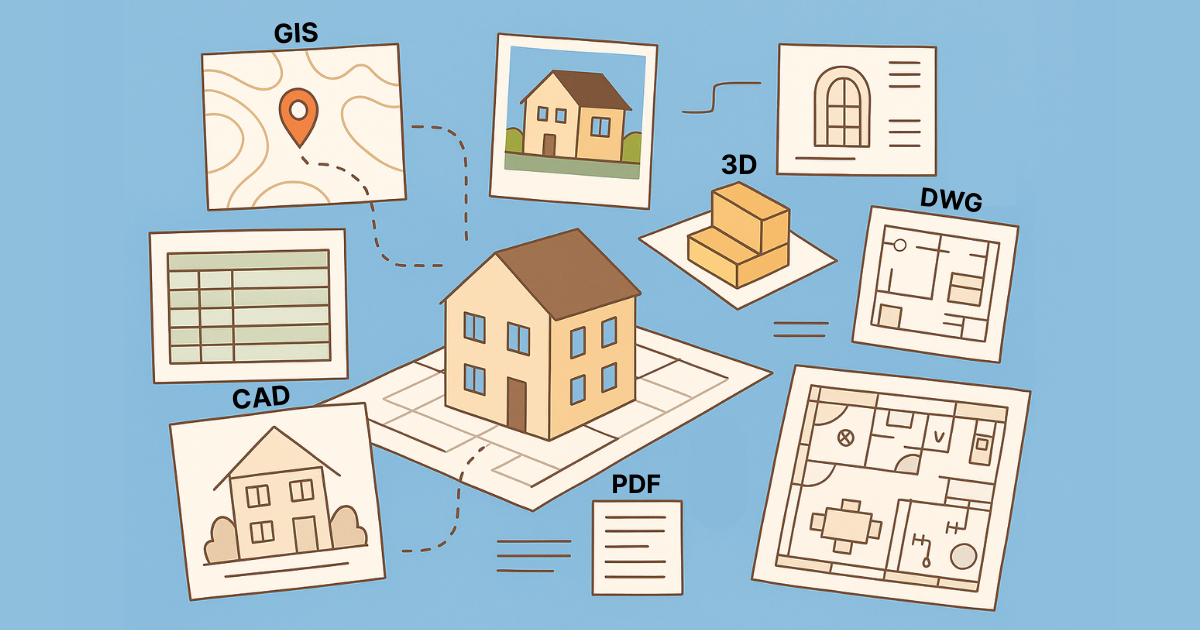
In fact, small-to-medium teams in many sectors choose Daminion because it works without the overhead of massive SaaS platforms. And AEC firms—spanning architecture, real estate, construction, and civil engineering—make up 30% of Daminion's users.
This focus means you get a DAM that excels at:
As comprehensive DAM software for AEC and other technical teams, Daminion evolves based on client feedback in that sector. For example, project-based workflows are in active development to make your searches even more contextual and intuitive.
With Daminion, you get predictable pricing: pay for your license, use your own storage. No hidden fees or enterprise-level costs.
You also skip a steep learning curve. As a DAM stripped of the features you may or may not need, Daminion is made to let your team get onboard quickly.
OpenAsset is a specialized, project-based DAM solution for architecture, engineering, and construction enterprises. It emphasizes marketing and human resources.
This DAM is built to serve large, multi-office firms that need to connect project data, marketing collateral, and employee information in one central, cloud-based hub. If your firm has dedicated teams for proposal generation and HR management, you'll find value in OpenAsset's specific focus.
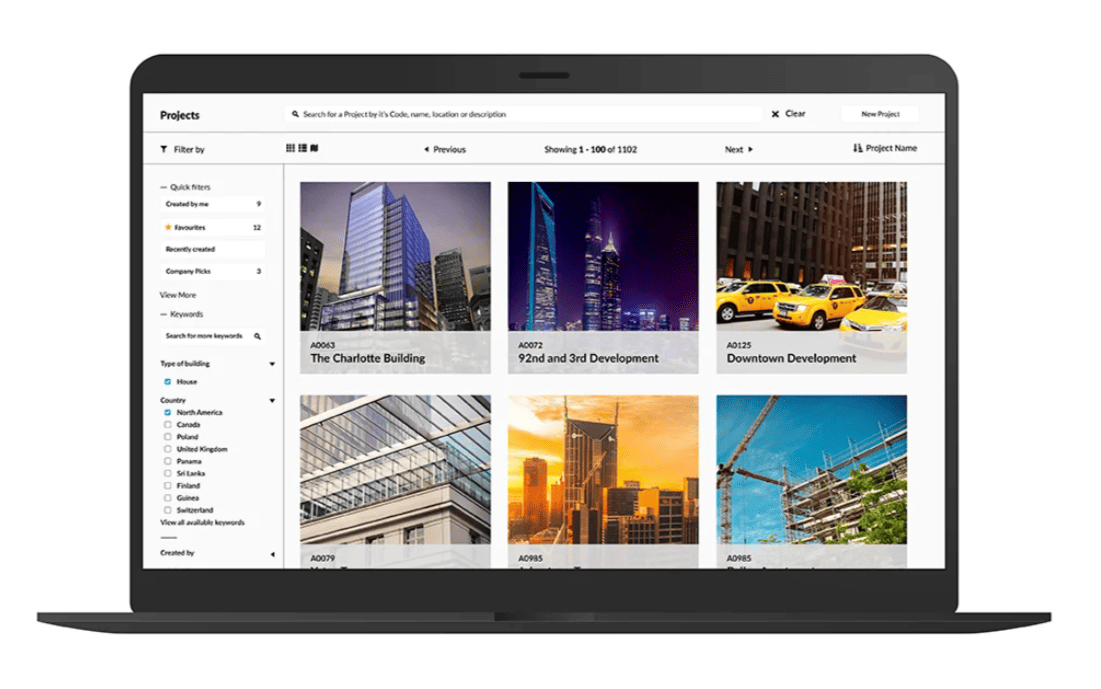
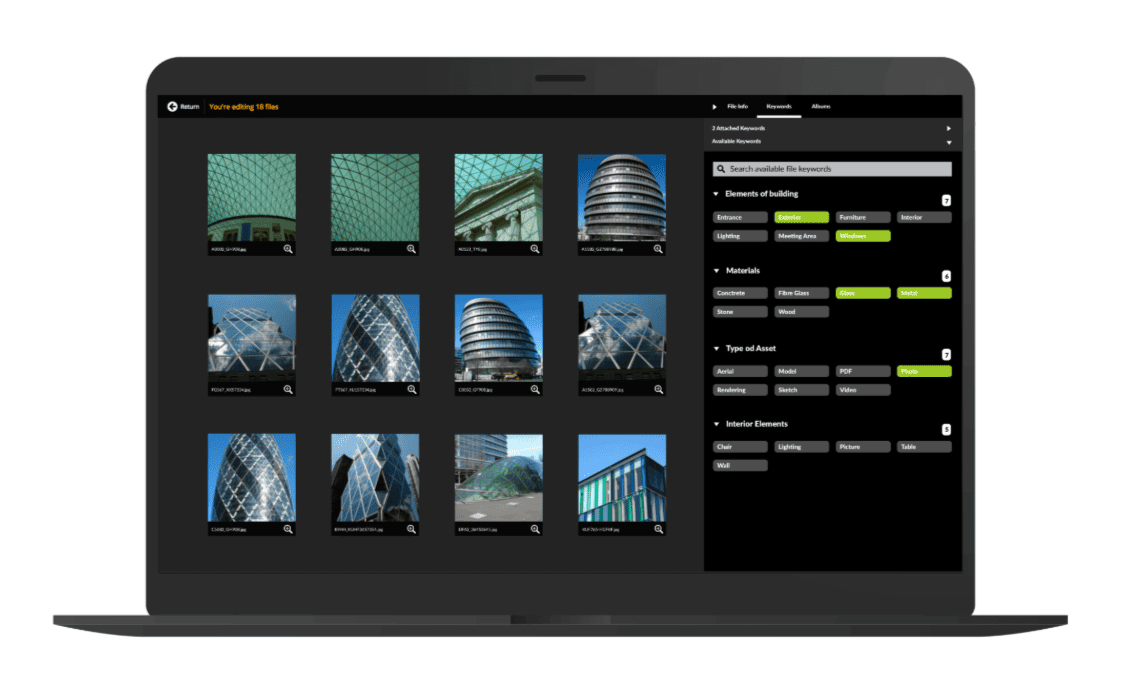
When comparing two DAMs, we need to look at storage, search, collaboration, and workflow support. These areas define the cost, control, and daily workflow of your AEC team. Let’s see how Daminion and OpenAsset stack up.
You have two options for storing your digital assets: on your premises or in the cloud. Let’s see which one meets your needs best.
Cloud-only companies like OpenAsset argue that you benefit from the massive security budgets of public cloud providers. Sure, big fish like Oracle (used by OpenAsset, by the way) invest millions of dollars in security research and architecture. But this provides no guarantees. Just look at the latest breaches:
For an AEC firm, the cost of exposed tender documents or confidential client plans is incredibly high. This is why Daminion lets you choose between on-premise and private cloud setups.
Most of Daminion's AEC clients prefer the on-premise or private cloud option. They benefit by accessing massive files faster, controlling their costs, and keeping sensitive project data “at home.”
What about on-premise costs? If you already have an IT environment, Daminion integrates right into it. Expect no extra hosting or setup fees—you pay the same license price annually.
When your team grows or your storage needs expand, you scale your own infrastructure, not your license cost. This often makes on-premise a more straightforward investment over the long run.
I don’t know what will happen if someone uploads a larger file—could OpenAsset automatically charge you more? Some SaaS providers do so.
Cloud backups are useful for offsite redundancy. But they create a critical reliance on internet speed and provider uptime during a recovery. Have you considered restoring 10 terabytes of Revit models and 8K renders over a standard internet connection? It could take days.
On-premise or hybrid backup solutions give you immediate access. You're limited only by your local network speed. When a disaster hits—and your network might be compromised—local access can mean the difference between minimal downtime and a full-blown crisis.
When choosing between Daminion and OpenAsset, make sure you understand which type of storage works better for you. While OpenAsset uses what it considers to be best for everyone, Daminion leaves that choice to you.
A system of roles, permissions, and version control can make a difference in how well your teams work together and communicate with external partners. And this is where Daminion and OpenAsset offer two distinct approaches.
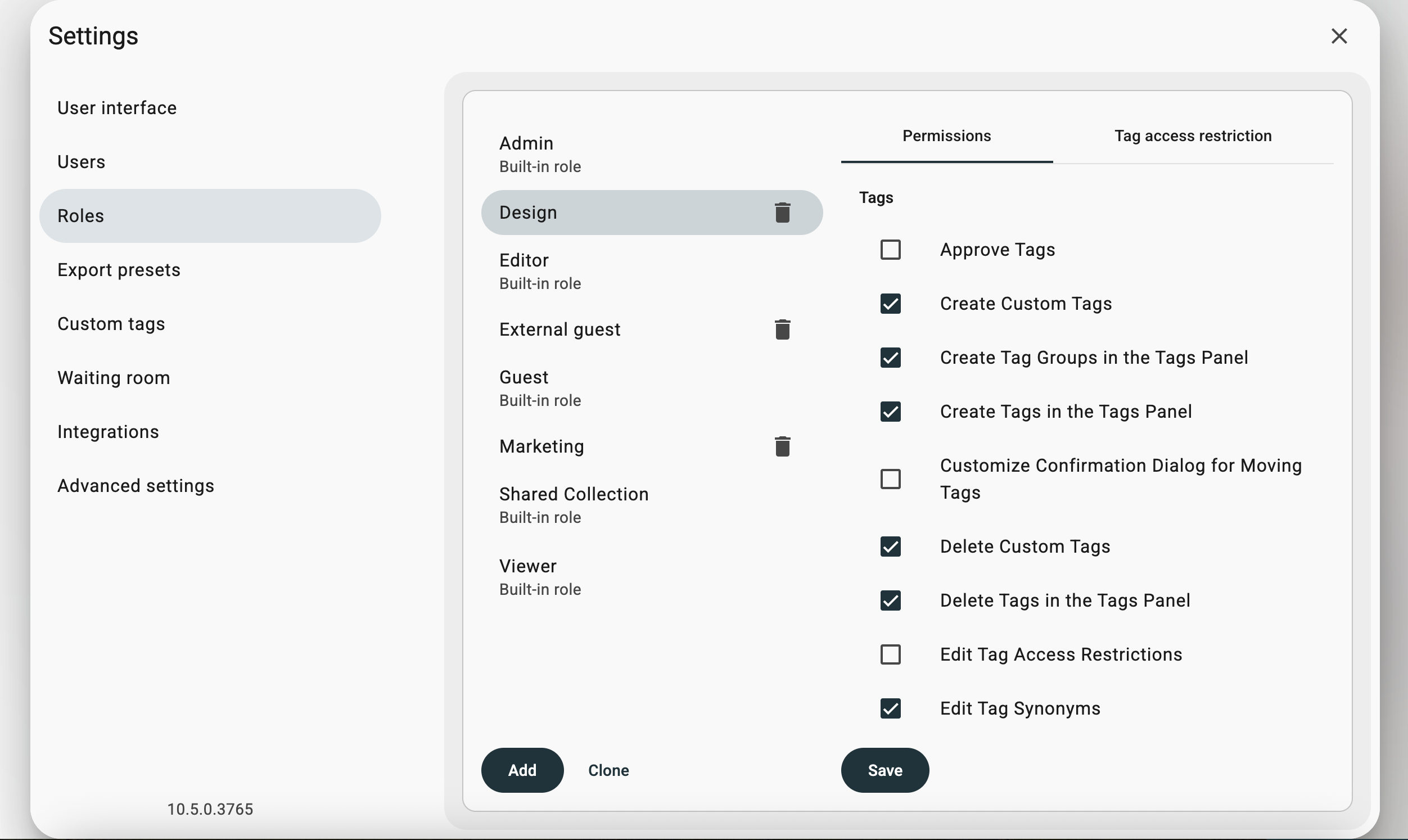
You can even lock specific metadata tags—like a project number—to prevent changes and keep your taxonomy clean.
Daminion’s 'Shared Collections' allow you to manage portfolios and communicate with clients. You can easily share the right visuals and documents externally to build project showcases, create proposal libraries, or send visual references for tenders. And you still retain control over your versions and security.

Want to know if you can make a DAM part of your current workflow? Check out if it integrates with your tools.
OpenAsset connects to a wide range of software, from Adobe InDesign and WordPress to project management tools like Deltek and CRMs. Daminion's integrations focus on core creative tools like Adobe InDesign, Illustrator, and Premiere Pro, while supporting commonly used software like Gmail and Microsoft Outlook.
Both DAMs offer an API for custom connections, but their philosophies differ.
In other words, you can connect many cloud apps, but you also have to rely on middleware that you don't control. This means things can get more complex and new costs may surface at any moment.
That means your metadata stays with your JPEGs, PDFs, and InDesign files permanently. You get a single source of truth that isn't a fragile, middleware-dependent link ready to break on the next API update.
Furthermore, Daminion offers an Export SDK, letting your developers build custom export plug-ins right into the desktop client. As a result, you get true, future-proof control over your data and workflows—a must-have for on-premise deployments.
OpenAsset includes functionality that extends beyond traditional digital asset management. You'll find features like:
Large real estate developers can find these built-in content management tools helpful. For a small or midsize architecture studio, you may end up paying for a broad platform when you only need a powerful, focused DAM. In this case, Daminion stands out as a valid OpenAsset alternative.

Let's look at how two different AEC firms used Daminion to solve their asset challenges.
Leroy Street Studio, an award-winning NYC architecture firm, had accumulated decades of uncategorized project files. Finding the right asset was a daily challenge.
After trying other tools, the LSS team chose Daminion. They found that
The studio split its assets into two catalogs: one for architects and one for marketers. Each team got the exact functions they needed for their daily work.
Thanks to the custom taxonomy the studio created, all files are now just one click away.
DC8 Studio is an Australian multidisciplinary team of architects, urban planners, and designers stored most of its reference materials in physical books. This system eventually stopped working.
The studio needed a way to navigate visuals at a glance—without opening every single file in Revit or AutoCAD. Daminion provided that solution.
After setting up the DAM, the studio took full control of its library. Project files no longer got lost. Teams stopped recreating visuals from scratch.
Your choice in digital asset management software for your architecture company will likely come down to fit. As you make your final decision, ask yourself these questions:
If you picked the first part in each of these questions, consider Daminion. Request a free demo, get a custom pricing plan based on your team's size, and start managing your project files with complete control.