
October 9, 2025
Updated


Branding is an important feature of any business, as it creates a distinct identity that distinguishes it from competitors. Graphic design is important in building a successful brand because it graphically communicates its ideals and personality.
In this post, we’ll look at how branding, brand design, and graphic design are related, and how a well-executed brand may lead to company success.
Branding is the foundation for creating a distinct identity for a company or product, laying the groundwork for how a company presents itself to the outside world. It consists of several key components, each of which plays an important role in distinguishing a brand from its competitors and ensuring a strong connection with the target audience.
The name of a brand is frequently the first impression a consumer has of a company or product. It should be memorable, simple to say, and capture the essence of the brand’s identity. A well-chosen name can set a brand apart from competitors and leave a lasting impression on the audience.
A logo serves as a visual symbol of a brand’s identity and is often the most easily recognized aspect of a company. It needs to be unique, adaptable, and scalable to function across various platforms and mediums. As a result, a well-crafted logo embodies the brand’s essence and conveys its message in a memorable way.
A slogan, or tagline, is a concise and memorable phrase encapsulating a brand’s message or value. Not only should it be easy to remember, but it should also evoke positive emotions in the target audience. Consequently, a compelling slogan can fortify a brand’s association and contribute significantly to its identity.
Color palettes, typography, and imagery are examples of brand visual aesthetics. These elements combine to create a unified and consistent look and feel across all brand touchpoints. A well-designed visual aesthetic contributes to the brand’s identity by making it easily recognizable and memorable.
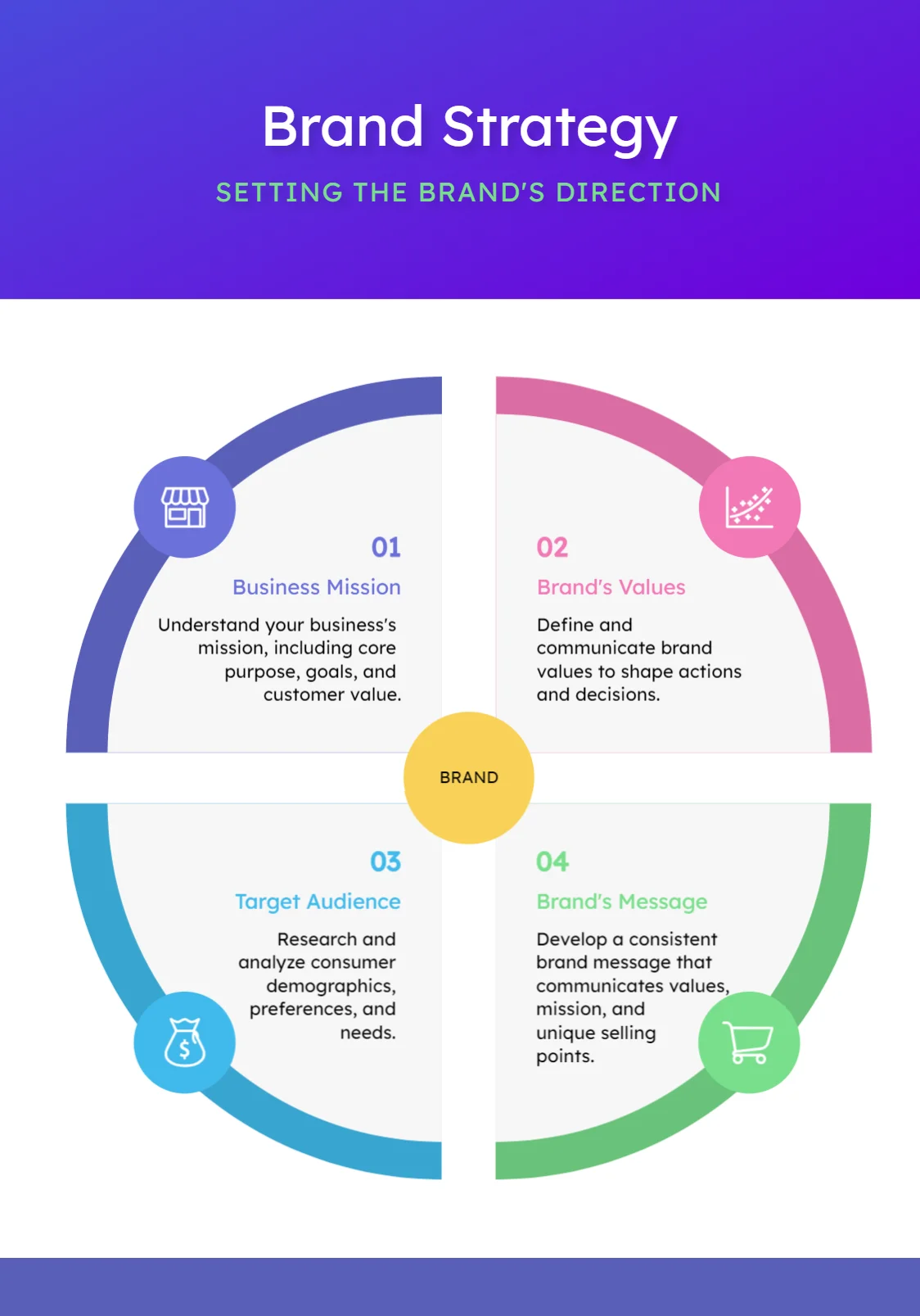
A well-defined strategy lays the foundation for successful branding. It serves as a roadmap for creating a brand that resonates with consumers and stands out in the market. The process of crafting a comprehensive branding strategy involves several essential steps, ensuring a consistent approach to building a brand’s identity.
Knowing the business’s objective is the first step in branding. This covers the company’s mission, objectives, and customer value. By integrating the brand with the company’s objective, organizations may develop an authentic and meaningful brand identity that resonates with their target audience.
The guiding principles that shape a brand’s actions and decisions are its values. These values should be clearly defined and communicated because they contribute to the brand’s personality and reputation. Businesses can create a strong emotional connection with their audience and foster trust and loyalty by incorporating these values into their branding strategy.
Understanding the target audience is critical in developing an effective branding strategy. This entails researching and analyzing the demographics, preferences, and needs of the consumers that a brand wishes to target. Businesses can connect with their target audience by customizing their brand’s message and visuals.
A clear and compelling message is central to a successful branding strategy. This message should communicate the brand’s values, mission, and unique selling proposition in a way that speaks to the target audience. By developing a consistent and powerful brand message, businesses can create a lasting impression on their customers and differentiate themselves from competitors.
A solid branding strategy serves as the guiding force behind all branding decisions. From choosing the logo design and color scheme to developing marketing campaigns and content, the strategy ensures that every aspect of the brand is aligned with its mission, values, and target audience. This consistency helps to reinforce the brand’s identity and makes it easily recognizable and memorable.
In conclusion, establishing a brand’s direction with a well-defined strategy is vital for creating a robust and lasting brand identity. By comprehending the business mission, outlining brand values, pinpointing the target audience, devising an engaging message, and directing branding decisions, businesses can develop a brand that resonates with consumers and distinguishes itself in a competitive market.
Brand design is responsible for visually representing a brand’s identity. It incorporates elements like color schemes, typography, and imagery to create a cohesive and appealing look and feel. Graphic design plays a crucial role in this process, as it involves creating and organizing visual elements to effectively communicate a message.
The relationship between branding, brand design, and graphic design is clear and significant. A robust brand relies on visually attractive and consistent design elements that represent the brand’s values and message. These three aspects work together to create a coherent and impactful brand identity that resonates with consumers and sets the brand apart from its competitors.
Developing a compelling brand design is a multi-step process that requires a thorough understanding of the brand’s context, creative brainstorming, and meticulous execution. This process ensures that the design aligns with the brand’s objectives and resonates with its target audience. Let’s explore each step in greater detail.
The research phase is crucial in laying the groundwork for a successful brand design. It involves gathering information about the company’s goals, target audience, competitors, and industry trends. This comprehensive understanding of the brand’s context helps inform the creative process and ensures that the design decisions made align with the brand’s objectives and appeal to its audience. The research phase may include:
With a solid understanding of the brand’s context, the ideation phase kicks off, allowing designers to brainstorm ideas and concepts for the visual elements. This stage is all about exploring possibilities and thinking creatively to develop a unique and impactful brand design. Key activities during ideation may include:
The final stage in crafting a brand design is the execution, where the chosen design concept is transformed into tangible visual assets. This phase involves creating the logo, color palettes, typography, and other visual elements that will make up the brand’s identity. The execution process requires attention to detail and consistency to ensure a cohesive brand design. Key aspects of the execution phase may include:
Crafting a brand design is a meticulous process that involves research, ideation, and execution. By understanding the company’s goals, target audience, and industry context, exploring creative concepts, and executing the chosen design with precision and consistency, businesses can create a cohesive and effective brand design that effectively communicates their identity and resonates with their audience.
Strong branding and graphic design can greatly influence a business’s success. Well-known companies like Apple and Nike showcase this. They’ve used branding to develop unique identities, appealing to their target audience. As a result, they enjoy remarkable customer loyalty and global recognition.
Apple’s branding is centered around minimalism, innovation, and user experience. The company’s design philosophy is reflected in its clean and sleek product designs, packaging, and marketing materials. The iconic Apple logo, with its simple yet elegant silhouette, has become synonymous with cutting-edge technology and high-quality products. Some key aspects of Apple’s successful branding include:
Nike’s branding is built on the principles of empowerment, performance, and the pursuit of greatness. The company’s iconic swoosh logo and powerful slogans, such as “Just Do It,” have become emblematic of athletic achievement and personal growth. Nike’s branding success can be attributed to the following factors:
Apple and Nike are excellent examples of successful branding and graphic design. They’ve created unique identities that appeal to their target audience. By maintaining this image across all platforms, both companies have gained worldwide recognition and loyalty. This shows the positive effect of solid branding on business success.
A successful brand design hinges on three principles: consistency, recognition, and differentiation.
A brand designer is responsible for creating and maintaining a brand’s visual identity. Key skills include creativity, an eye for detail, strong communication, and proficiency in design software. Additionally, a deep understanding of marketing, consumer psychology, and industry trends is crucial for designing successful brand identities.
Current trends in branding and graphic design include minimalism, bold typography, and the use of illustrations. Best practices include keeping designs simple, prioritizing user experience, and staying true to the brand’s values. By staying current with trends and adhering to best practices, businesses can create impactful and enduring brand designs.
In conclusion, branding is an essential component of business success, and graphic design is integral to crafting a strong brand identity. By understanding the connections between these concepts and following best practices, businesses can create compelling and memorable brand designs that resonate with their target audience.
Successful branding and graphic design projects require seamless collaboration between designers, business owners, and marketing professionals. Open communication and ongoing feedback throughout the design process ensure that the final result aligns with the brand’s objectives and resonates with the target audience. One effective way to facilitate this collaboration is by implementing Digital Asset Management (DAM) systems.
Digital Asset Management (DAM) systems are software tools that help companies manage digital assets like images, videos, and documents. They centralize these assets on one platform, allowing teams to work efficiently and collaboratively by sharing and accessing them easily.
DAM systems offer numerous benefits in the context of branding and graphic design projects, including:
To fully leverage the benefits of DAM systems, businesses should integrate them into their design workflows. This involves:
In conclusion, DAM systems are crucial for collaboration and communication in design projects. They centralize digital assets, simplify workflows, and encourage open communication. This helps businesses create branding and graphic designs that meet their goals and appeal to their target audience.