September 17, 2026
Updated


Marketing job descriptions look neat on paper, but as any insider will tell you, the job itself rarely does. A campaign can change overnight; a new system can reshape the whole workflow. And on a small team, the marketing director might have to step into sales, PR, events, or shipping logistics.
Jamie Beth Parker has spent more than 15 years building a marketing career across pharmaceuticals, education, technology, and large corporate environments. Along the way, she's handled influencer marketing, email, SMS, social media, PR, sales outreach, event management, and plenty of work that no marketing textbook would ever list.
At the time of our interview, Jamie was Marketing Director at Tipping Point Media, a small company that creates experiential learning for pharmaceutical, medtech, life sciences, and educational organizations. Its programs use formats such as VR, AR, mixed reality, simulations, e-learning, and AI-enabled experiences to make complex subjects easier to understand.
We talked with Jamie about what actually keeps a marketer valuable over the long haul. One answer came up again and again: adaptability.

Jamie doesn't build VR programs, and she isn't a designer. She'll tell you so plainly.

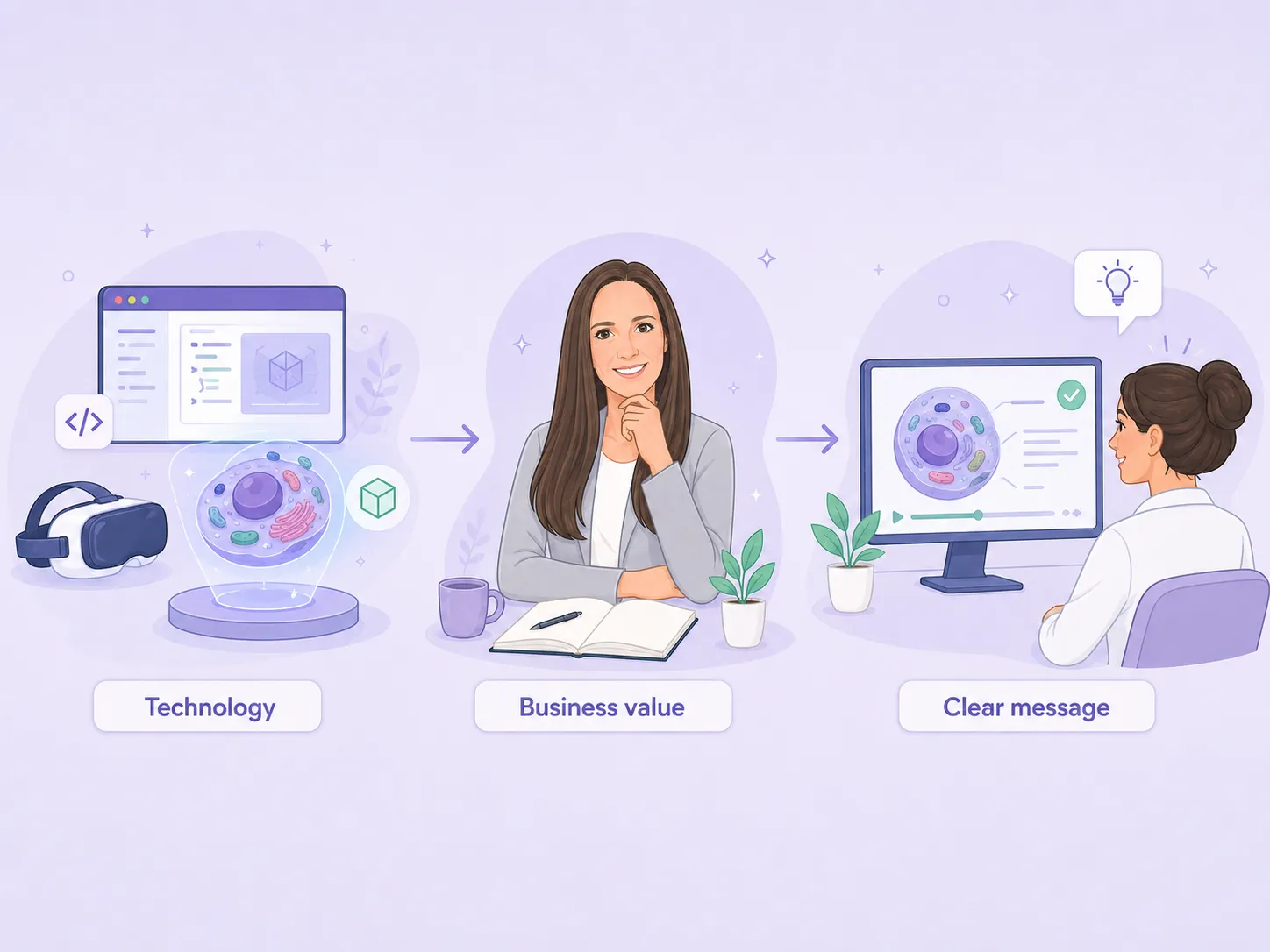
That line captures how she saw her role at Tipping Point Media. The company creates immersive learning for pharma product launches, disease-state education, medtech, and life sciences, but Jamie's job was never to write the code or model the 3D cell. Her role was to understand the business value of that work and get it across to the people who needed it.
Her background helped here. Eight years in pharmaceutical marketing plus a stretch in education meant she understood how these audiences thought and what they were trying to solve. She points to a program the team built for Fayetteville State University, where students put on VR headsets and stepped inside a living cell for their Biology 150 course. None of that was technology for its own sake. The point was to help people experience complex information in a way they'd actually remember.
At the time of our interview, Tipping Point Media had around 16 internal employees plus outside contractors. The team included project managers, designers, and specialists certified in areas like medical 3D design, with leadership staying close to both creative and commercial decisions.
When we asked Jamie what kept that group effective, she didn't reach for software. She talked about people talking to each other.
"I'm able to walk out my door and go talk to five different people on my team and say, 'Hey, what's going on with this?'" she says. Her boss can do the same with her at any moment. That kind of open, direct access matters, and so does everyone pulling the same way.
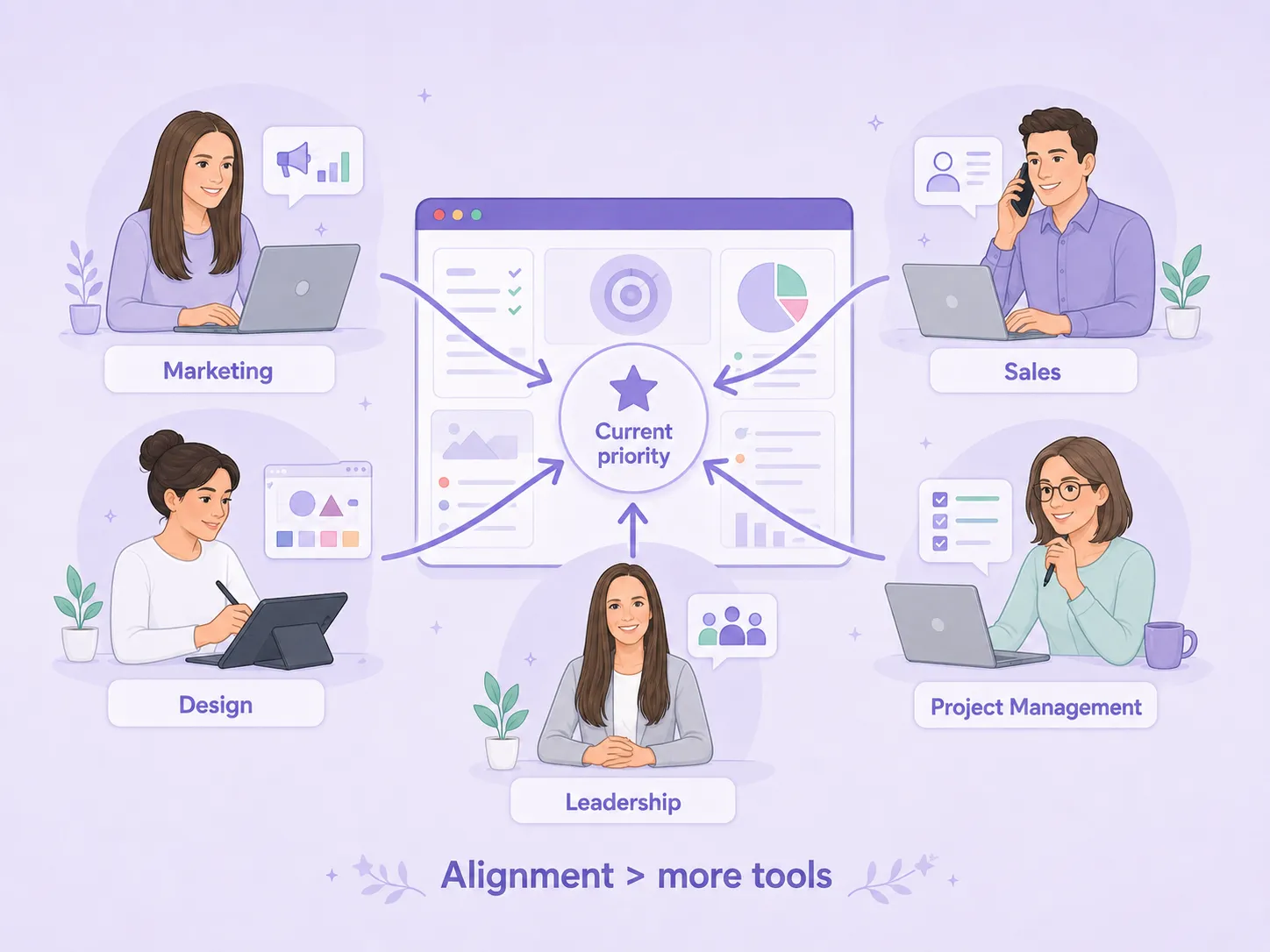
Alignment starts with everyone knowing the current priority. When the whole team understands what matters most right now, marketing and sales stop working toward different things and start pulling in the same direction.
Jamie described reading the team's health by two things at once. Morale and attitude told her a lot, especially during a tough stretch, but the commercial side never dropped out of view. As she put it, the team still had to bring in the money that paid the bills.
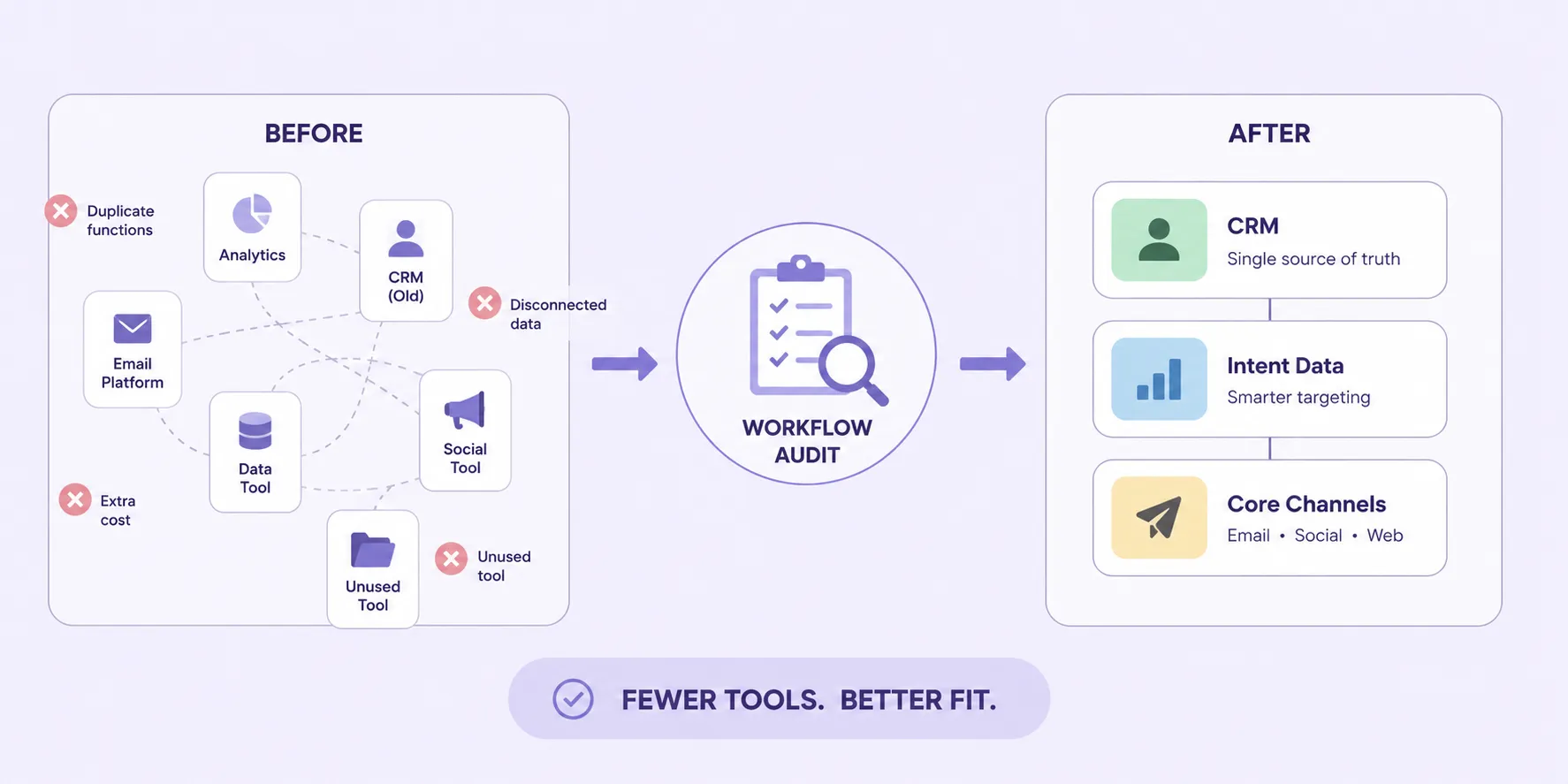
Jamie had been at Tipping Point Media only a few weeks when she started reviewing the marketing systems already in place. Some of them weren't earning their keep.
So she made changes, discontinuing two systems, bringing on a stronger CRM, and adding a tool for intent data. The goal was never to collect more platforms. She wanted to streamline the workflow and stop paying for tools that weren't pulling their weight.
The transition went smoothly partly because only two people worked closely with those systems: Jamie and the company president. Shifting someone off a familiar process is never automatic, and she credits his openness for making it work. He was used to doing things one way, but was willing to try something new.
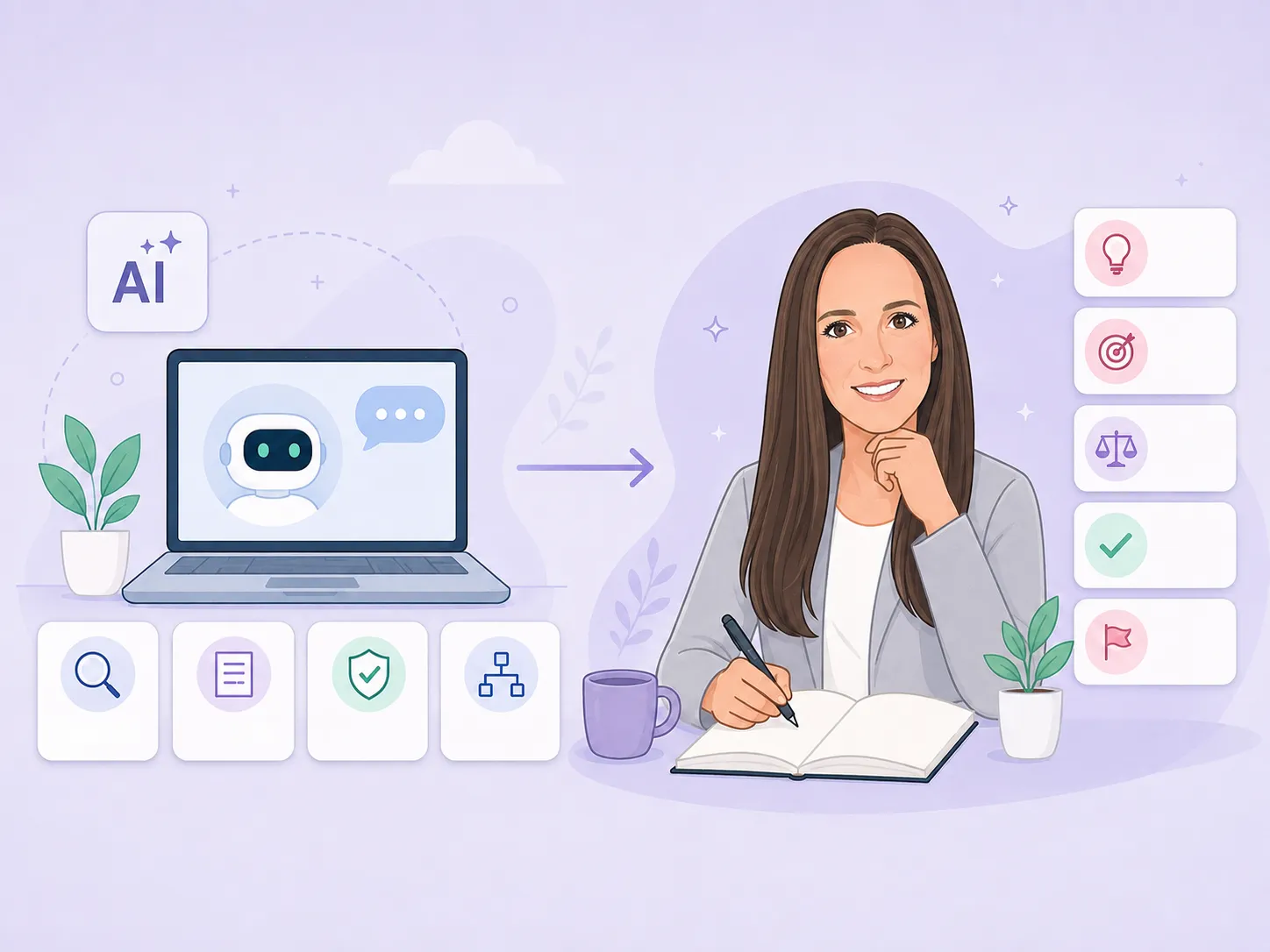
Ask most people about AI and the mood turns cautious. Jamie goes the other direction. She's even written what she calls “love letters to AI,” an intentionally warm and curious way of approaching a conversation that's often driven by anxiety. In one of those letters on LinkedIn, she addresses AI directly and reflects on the kind of relationship humans may want to build with it. Curious what that perspective sounds like in conversation? She also gets into it on this podcast.
"If AI is truly learning from us, then we need to show it the good side of what we have to offer," she says.
The affection doesn't mean she hands everything over to it. At Tipping Point Media, Jamie's team used ChatGPT, Microsoft Copilot, and ChatSimple regularly, and the company had also built an AI assistant for its website named Tipper. Jamie gave Tipper a personality so visitors could ask questions about the company and get answers in a friendly, digestible way.
But there's a line she keeps clear.
That's the balance Jamie described. At TPM, the team leaned on AI every day without leaning on it completely, using it to extend what people already knew rather than to stand in for them. Knowing when and how to reach for it, she argued, mattered far more than reaching for it everywhere.
The clearest example of adaptability in Jamie's career came in March 2020, when she was managing influencer marketing for Triple Paste, a diaper rash product, at Summers Laboratories. The campaign was ready to go. Parenting influencers, mostly mom bloggers she'd built real relationships with over the years, were set to encourage families to toss a small two-ounce tube into their bags for spring break travel.
Then everything shut down, and nobody was going anywhere.
A campaign about vacation travel had gone from useless to actively risky overnight, the kind of thing that would land as tone-deaf while families were stuck at home and anxious. Jamie had roughly 48 hours to fix it.
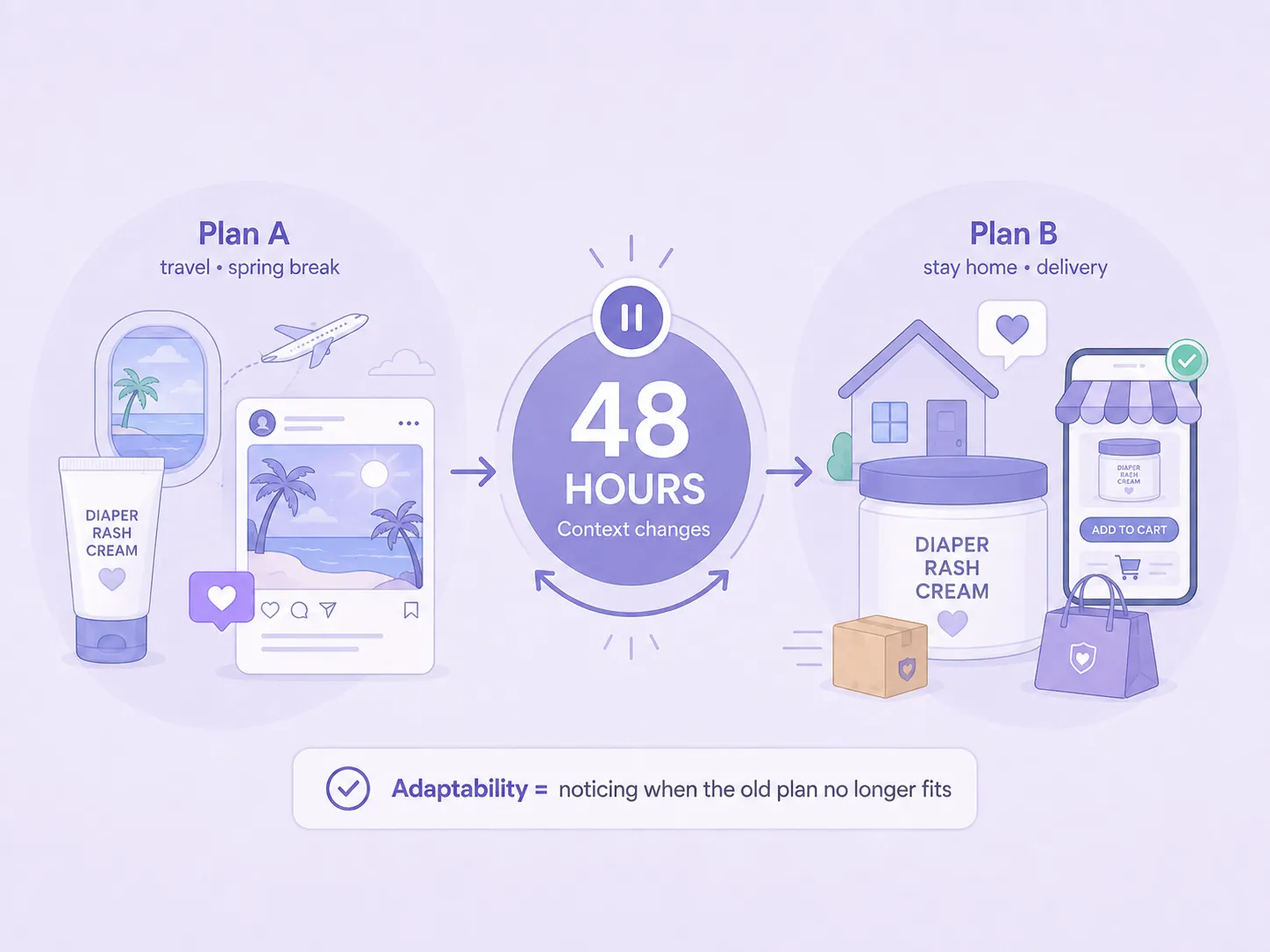
She and the influencers rewrote the whole message. The travel angle went out. In its place came a larger 16-ounce tub for families staying home, framed around a stressful stretch when routines slip and diaper rash gets more common. The new campaign pointed customers toward contactless pickup and delivery through Amazon, Walmart, and Target, and the team confirmed the product was in stock at each before sending anyone there. All of it had to be coordinated across multiple influencers, fast.
Being small helped, since the team could turn on a dime without layers of approval to clear. But speed alone wasn't what saved it. The real skill was reading the moment, seeing that the ground had shifted, and being willing to scrap a finished plan.
During Jamie's time at Tipping Point Media, the design team spent most of its hours on billable client projects, so every internal marketing request pulled time away from paid work. That meant Jamie had to be choosy about asking for new assets.
Her answer was to work with what already existed. She repurposed content, adapted existing materials for new campaigns, and kept the messaging and visuals consistent with the brand. She also avoided commissioning something new without a clear reason. “I've been really good at repurposing a lot of stuff that we have,” she told us, “and making sure that we're putting out messaging that is consistent.”
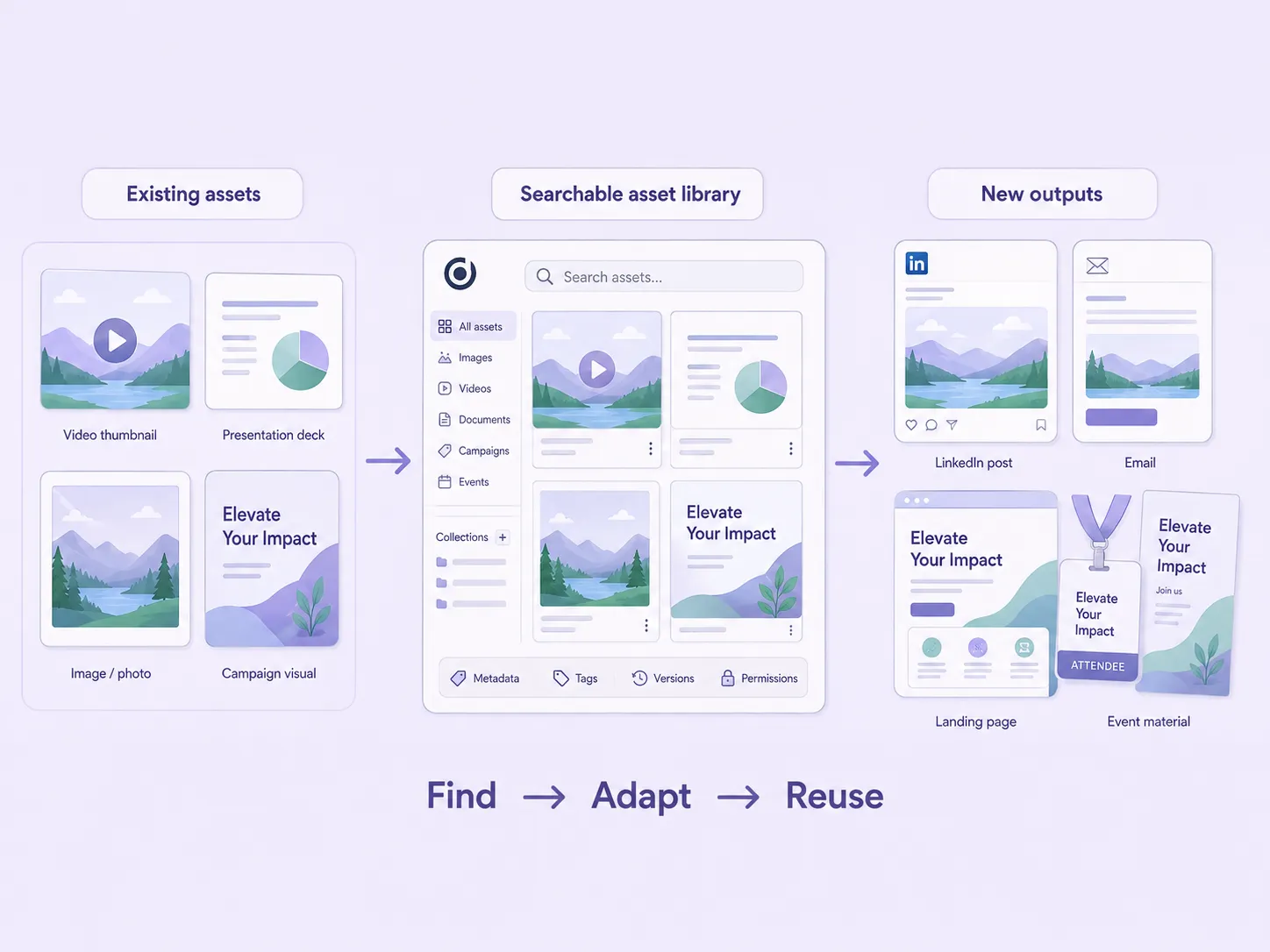
This is where organized digital asset management earns its place on a lean team. When you can quickly find an approved video, image, presentation, or campaign file, you can adapt what you already own instead of sending every request back to design.

I asked Jamie what she'd tell someone starting a marketing career today. Her answer was immediate: be as adaptable as you possibly can.
Her own résumé makes the case. Across more than 15 years in marketing, she's handled influencer marketing, email and SMS, social media, PR and press releases, conflict management, sales outreach, and event management. At the time we spoke, she was even sorting out whether a shipment of event equipment should go by ground, air, or LTL freight, and whether it needed a pallet.
"I used to have a shipping department with a loading dock. I don't have that here," she says. "We don't have a scale here, so I'm kind of handling all of everything."
She could easily say that's not her job, but she won't.
"There are so many hats to marketing and so many different ways to do it," she says. She isn't arguing that marketers should accept unlimited work or absorb every other department. Her point is that you become more valuable the moment you're willing to learn, ask questions, and understand what the wider business actually needs.
"It might not be what I was trained in, but I can learn it."
Jamie's career pushes back on a common assumption about what makes a marketer valuable. It isn't mastery of a single channel. What keeps her useful is the ability to read what a situation needs and adjust, whether that means swapping out a CRM, rewriting a campaign in 48 hours, or figuring out freight shipping from scratch.
Adaptability, the way she describes it, has nothing to do with chasing every new trend or saying yes to everything. It's about understanding what the moment calls for, then being willing to change the system, the message, or your own habits when the moment demands it.