
AI-Powered Asset Management Explained: Features, Benefits, and Why Teams Choose Daminion

When your business handles vast libraries of digital media on a daily basis, finding what you need, when you need it, can become a real headache. Thankfully, there’s a simple solution.
AI-powered digital asset management (DAM) automates tasks, organizes your content, and streamlines your workflow. In the process, AI DAM tools save time and money, allowing you to put those valuable resources to better use elsewhere in your business.
From automated AI tagging and metadata enhancement to facial recognition, the possibilities are virtually endless. To help you understand how tools like these could transform your business, let’s explore the power of AI in digital asset management. Automatic tagging pays off most in large video libraries, which is why it has become a standard expectation for media asset management systems.

Discover How Daminion Can Work for You
What is AI-Powered Digital Asset Management?
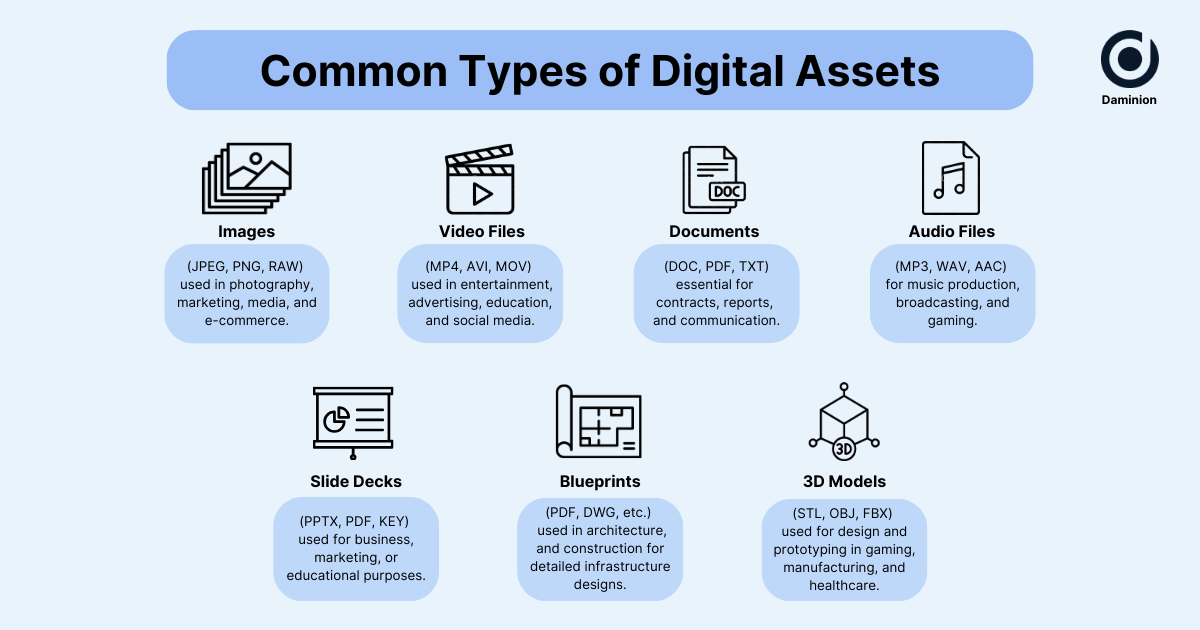
DAM software was originally a simple database designed to help you organize your digital assets, for example, photos, videos, audio files, marketing materials, and brand images. You could upload your digital media in one central place, categorize them, and then search for and retrieve them on demand.
Sounds fantastic, right?
The challenge was that someone had to do the categorization to make the media searchable—and that was a manual process that consumed substantial time and resources. So as soon as you tried to scale, the sheer volume of digital assets and the time required to sort them made the system unworkable.
Enter the power of artificial intelligence (AI).
Artificial intelligence uses machine learning and natural language processing to automate repetitive, manual tasks that once required a human to do them, freeing up that human to do more strategic or creative work.
Combine these two powerful tools and you have a game-changer.
AI-powered digital asset management allows you to automatically catalog all your digital media and then use the enhanced search functionality to find what you need, making your database infinitely more useful and scalable. Asset management AI tools can also help you manage your digital assets with far fewer people and increase your business’s ROI.
Quite simply, using AI in digital asset management is a smart way to enhance efficiency, streamline your workflow, and make the most of the human resources you have.
How AI Transforms the Way Your Team Manages Digital Assets
AI DAM features transform your workflow in multiple ways. Let’s take a look at some of the key benefits:
1. Save Money on Resources
Because AI-powered DAM does so much automatically, you no longer need dedicated DAM managers on your payroll. You’re reducing the time spent on low-value tasks, allowing you to do more with fewer people.
For example, a mid-sized company that would otherwise need 1–2 full-time DAM admins can often manage its entire asset library with part-time support, thanks to AI-powered software—potentially saving $75,000–$150,000 per year in staffing costs.
2. Increase Your Company’s ROI
With AI asset management tools automating so many processes, you save (and make) money on many fronts:
- Fast access to digital assets: Thanks to search functionality that uses natural language processing, team members can quickly and easily find what they need without worrying about precise keywords—and then move directly onto their next (income-generating) step.
- More productive use of time: With no need to spend a lot of time categorizing or searching for digital assets, your team is freed up to be creative, solve problems, and build relationships with clients.
AI Features You Can Start Using in DAM Right Now
So now you know that AI in digital asset management can save you time and money and improve your team’s productivity. Let’s take a look at exactly how it does that.
1. AI Autotagging and Metadata Generation: Skip the Busywork
A tag is a keyword or label that tells you about a particular digital asset and where it sits in the organization of your system. Metadata expands on that, giving you more technical information about that file. Together, these two elements help your DAM organize, store, and then retrieve the files you need.
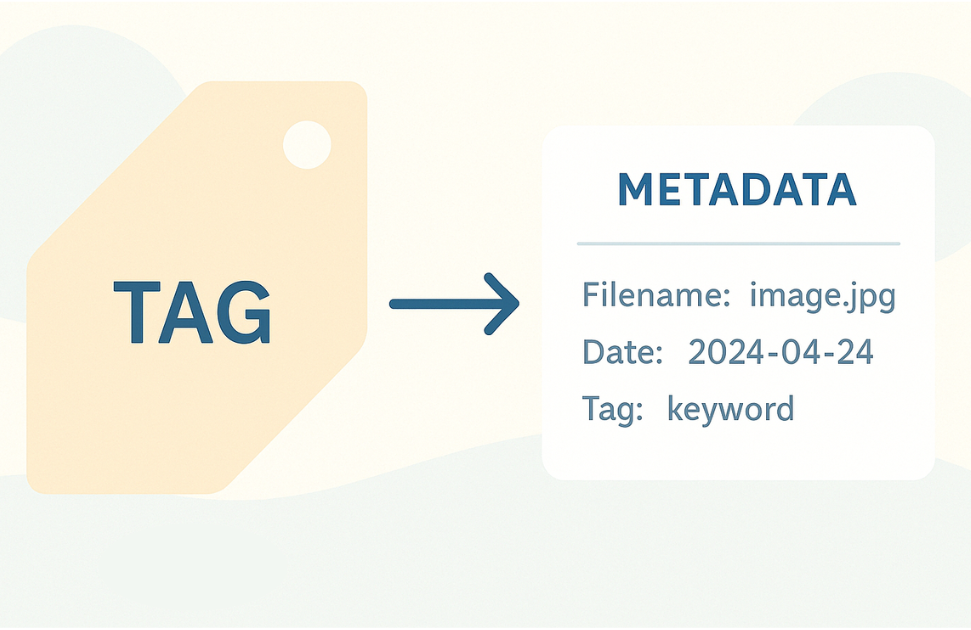
AI tagging software uses algorithms to analyze digital assets and automatically tag them, categorizing each asset into a predefined folder. For visual material, AI image tagging software can identify elements like objects, people, colors, demographics, activities, scenes, landmarks, and even emotional content.
Tagging software also generates detailed technical and descriptive metadata for the digital asset. This could include elements like file format, author, location, subject matter, and industry.
AI tagging speeds up the process of asset organization, enhances consistency and accuracy, and makes your digital database much more searchable.
For example, a living room photo for an interior design catalog might be tagged with “furniture”, “property”, “couch”, “comfort”, “plant”, and so on. Then, when you search for an image that features any of those concepts, the system will show that image as one of your options.


2. Facial Recognition: Instantly Spot Who’s Who
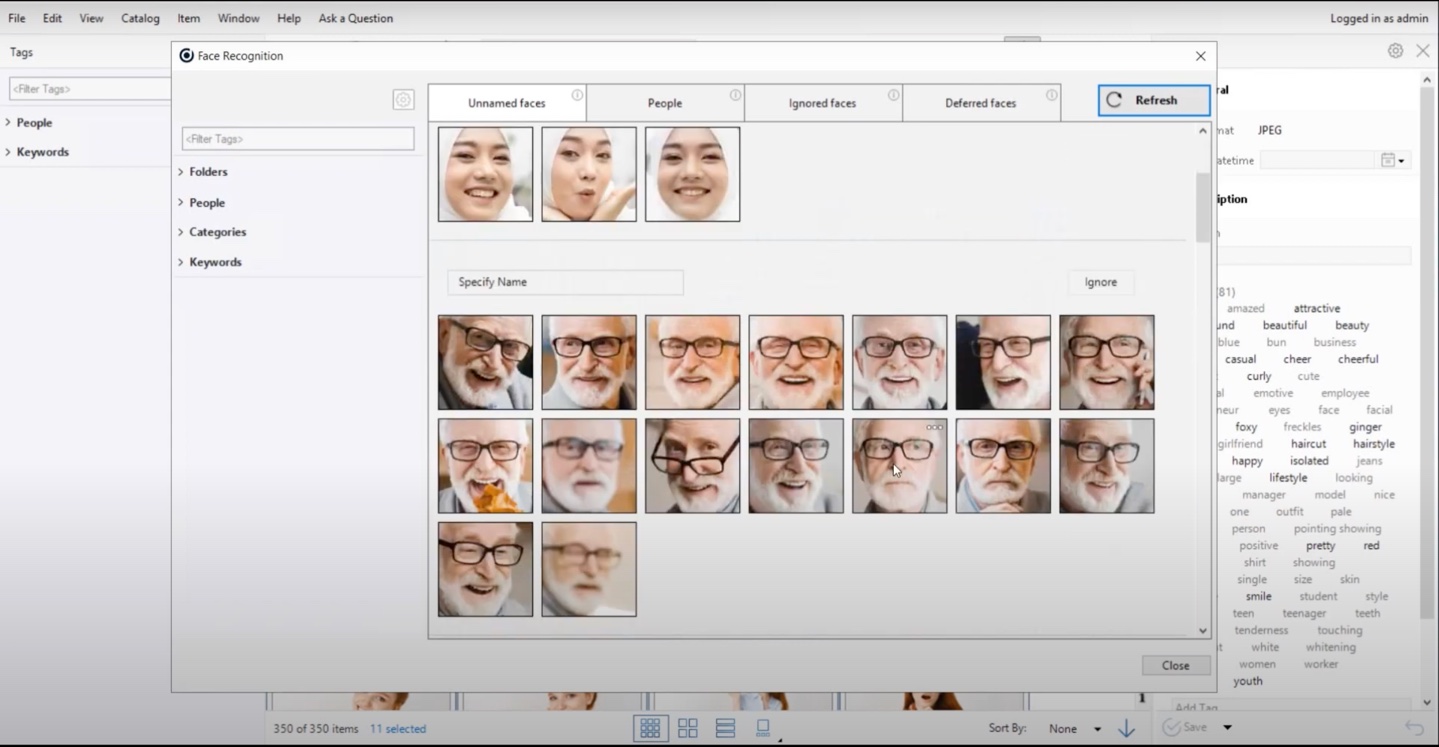
Facial recognition is a particular type of tagging that can identify faces in images.
This helps to categorize digital assets by specific individuals, for example, actors, models, or other types of talent. It ensures the visual content is very accessible while making it easy to manage usage rights.
For example, a publicity company might store all the photos that feature a particular actress, tagging each one with her name. Then, when they need to provide publicity images for an event that honors her contribution to the film industry, they can quickly call them up and choose the most appropriate ones.
3. Duplicate and Similar Image Detection: Clean Up the Clutter
AI-powered DAM allows you to locate images that are identical or similar to another one. This makes it easy to find and eliminate duplicates that are taking up valuable space or that might cause confusion. It can also help you find alternatives to an image, without the need for you to specify all the tags, categories, or metadata.
For example, say you work for a content management company and are looking for an image to illustrate an Instagram post. You’ve found one that might work but you’re not completely happy with it. You can ask your DAM with AI tagging to find you some similar images, then choose the one that works best.
4. Geotagging: Organize by Location, Instantly
Stock photo images and other media are sometimes tagged with GPS coordinates. Some AI-powered digital asset management systems can extract that information and add it to the asset’s metadata. This allows that asset to be searched for based on location.
For example, say an environmental management organization wants to check the progress of a rehabilitation project in a certain wild area. They could then search for all media related to that specific location, using the GPS coordinates.
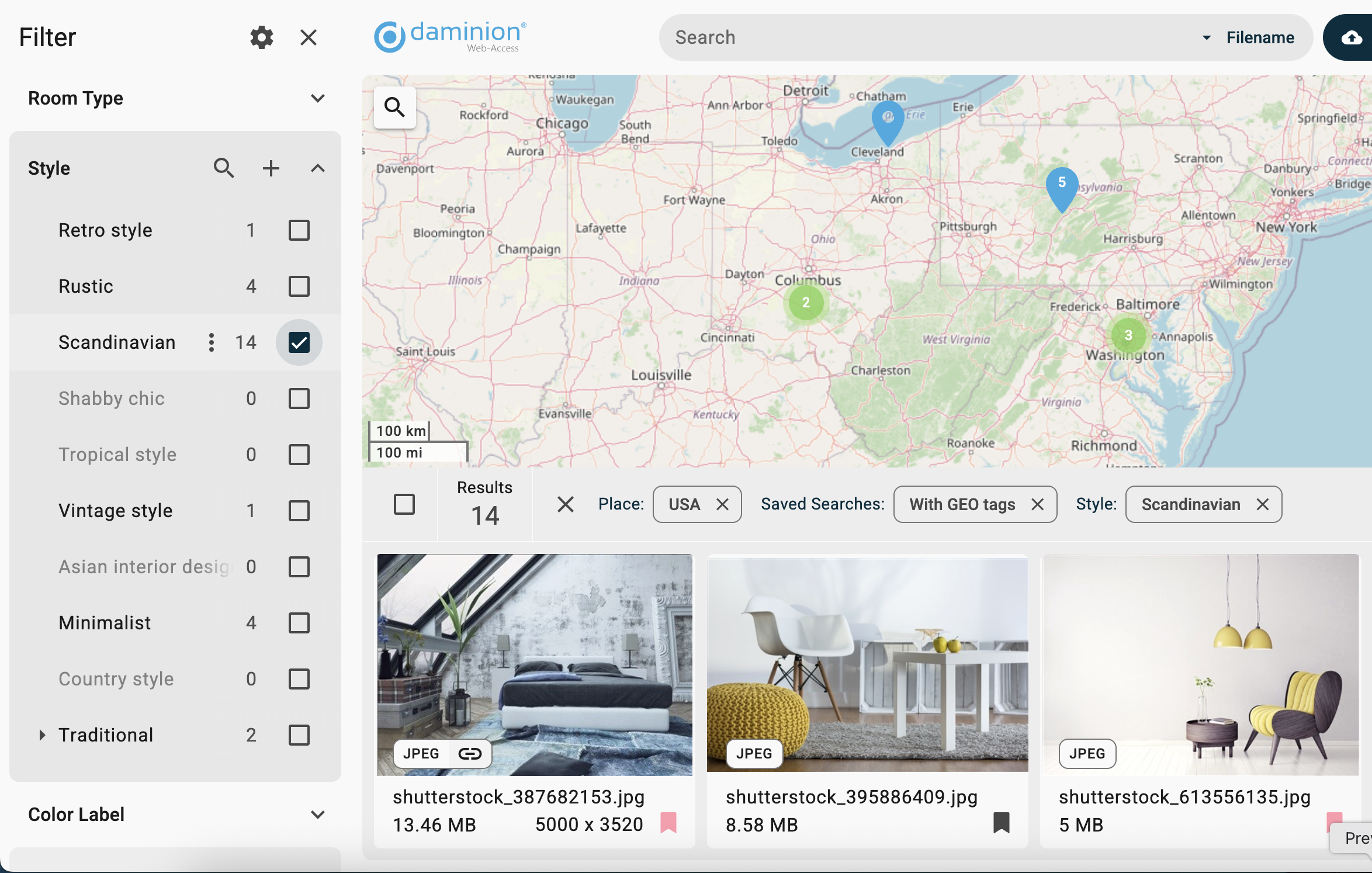
Daminion: Top On-Prem DAM with AI features
Daminion is an AI-powered digital asset management system with advanced AI features. It offers a robust, fully scalable on-prem solution that will continue to meet your needs as your image library grows from 100 assets to 1,000,000+ or more.
From its first foray into AI using Google Vision around two and a half years ago to its current integration with ChatGPT-4o mini, Daminion has continued to evolve its offering, paving the way in the AI transformation of DAM.
Also, as the technology for AI DAM tools has evolved, prices have dropped over the last few years, making the use of AI in digital asset management much more accessible.
Now, with ChatGPT Mini, the cost is only $3–4 per 1,000, which is significantly cheaper than manual work.
Managers just need to review the results, making the whole process up to 50x faster than manual tagging.
What Makes Daminion a Smart Investment
Daminion’s innovative, on-prem DAM solution stands out from the crowd for many reasons. For example:
- ✅ Stay Consistent with Custom Vocabulary: You can set up your categories and tags to suit your business. Then the AI will only assign tags from that predefined list, rather than importing all the tags from any stock photos or creating new, potentially irrelevant tags of its own. This means your taxonomy never becomes bloated and you always know where to find what you need.
- ✅ Local Facial Recognition with Full Privacy: While AI DAM tools are cloud-based by default, Daminion’s facial recognition functionality works locally. Sensitive information is never shared with third-party platforms, ensuring the security of your data. As a bonus, we don’t charge extra for facial recognition.
- ✅ Hierarchical Tagging for Clarity: Most AI image tagging software operates with a flat structure, which can lead to chaos in bigger companies that employ staff with similar or duplicate names. Daminion’s facial recognition is tied to “people” entities, which are then organized hierarchically, for example, Last name → First name or Department → Team → Employee, so you always know who that person is and where they fit into the company structure.
- ✅ Complete AI Control: Most vendors use third-party cloud AI models, including Daminion. However, with Daminion, AI tagging can be limited or disabled entirely. So if you prefer not to expose your data to third parties, that’s entirely your choice.
- ✅ Fast Onboarding: During onboarding, a special activation key enables auto-tagging. As you import your digital archive, the tagging process runs in parallel, efficiently organizing your existing digital library so you get a fully tagged archive within a few days. Then, when you add new files, they’re automatically tagged according to your criteria.
🔜 Coming up soon on our roadmap is video tagging, starting with speech-to-text conversion. This transcribes audio content, which means that recorded meetings, dialog, and narration can also be enhanced with tags and metadata. This is particularly useful for indexing video and audio assets, making them more manageable and searchable in their own right.
Take the First Step Toward Smarter DAM with Daminion
AI-powered digital asset management transforms the workflow of small teams in powerful ways. It uses auto-tagging and metadata generation to intelligently categorize vast libraries of digital assets, improves filtering and search functionality, and streamlines collaboration. This frees up people, time, and money, which can then be redirected to other income-generating activities.
Daminion is a leading on-prem solution that offers powerful and ever-evolving AI DAM features like custom hierarchical tags, local facial recognition, and complete control over how you use AI (or don’t).
To find out more about how AI DAM tools could transform your business and boost your bottom line, contact us today to schedule a demo with the Daminion team.
Discover How Daminion Can Work for You



Explore our DAM system
with your personal manager
demo from your dedicated manager.